
5G Rollout Cabling Challenges In GCC: Choosing The Right Tray Systems To Minimise Interference
Across the GCC, 5G deployment has moved from pilot phases to large-scale implementation. Urban districts, transport corridors, industrial zones, and commercial towers are now being integrated into next-generation telecom frameworks. While spectrum allocation and radio planning receive much of the public attention, the physical infrastructure supporting these systems determines operational consistency. As established cable tray manufacturers in UAE, we have seen how containment strategy directly influences signal reliability in high-density telecom environments.
In our work at West Port Middle East, we have observed that cable containment decisions directly influence signal stability and long-term service performance. In high-frequency 5G environments, physical routing, structural support, and segregation discipline are not peripheral matters; they are central engineering requirements.
The Physical Layer Reality Of 5G Networks
Unlike previous generations, 5G depends on dense fibre backhaul, distributed antenna systems, and compact node installations. Small cells are often mounted on rooftops, within commercial ceilings, along transport stations, and inside mixed-use developments. This increases cable density in confined areas where mechanical, electrical, and telecom systems converge.
Mid-band and millimetre-wave frequencies, widely adopted in GCC networks, are more sensitive to environmental and structural inconsistencies. While fibre itself is immune to electromagnetic interference, associated equipment, power supplies, grounding systems, and RF feeders are not. In high-density installations, unmanaged proximity between services introduces measurable interference risks. In practical terms, this means containment systems must be evaluated not only for strength but also for their influence on electromagnetic behaviour and cable integrity.
Where Interference Risks Emerge
Interference within 5G support environments typically arises from:
- Close routing of power and signal circuits
- Inconsistent grounding continuity across metallic pathways
- Overloaded trays causing cable compression
- Thermal buildup within enclosed containment systems
These factors do not always produce immediate system failure. Instead, they often contribute to gradual signal inconsistency, higher attenuation rates, and maintenance complications.
In high-rise commercial towers or transport infrastructure across Dubai, Riyadh, and Doha, shared service corridors are common. Without defined segregation and engineered routing strategies, the probability of service disruption increases over time.
Engineering Considerations In Tray System Selection
Structural Integrity Under High Cable Density
5G installations require greater cable volumes per node compared to legacy systems. Tray systems must support concentrated loads without deformation. Even slight deflection across long spans can compromise bend radius compliance for fibre runs.
Load calculations must account for:
- Fully populated cable weight
- Future expansion allowance
- Environmental stress factors
- Maintenance access requirements
Under-specified containment creates cumulative strain on cabling and anchors.
Service Segregation And Route Discipline
Physical separation remains the most effective method of reducing electromagnetic coupling. Power distribution, fibre trunks, RF feeders, and control circuits should follow distinct containment pathways wherever possible.
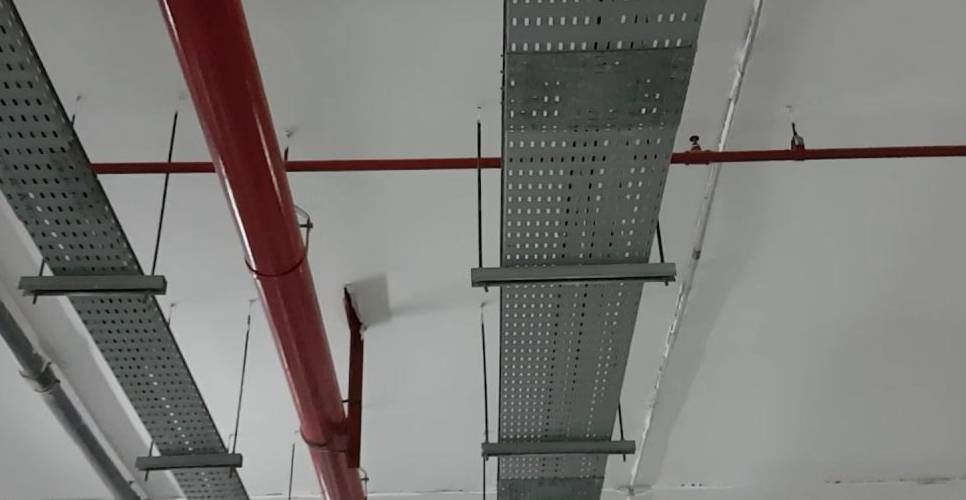
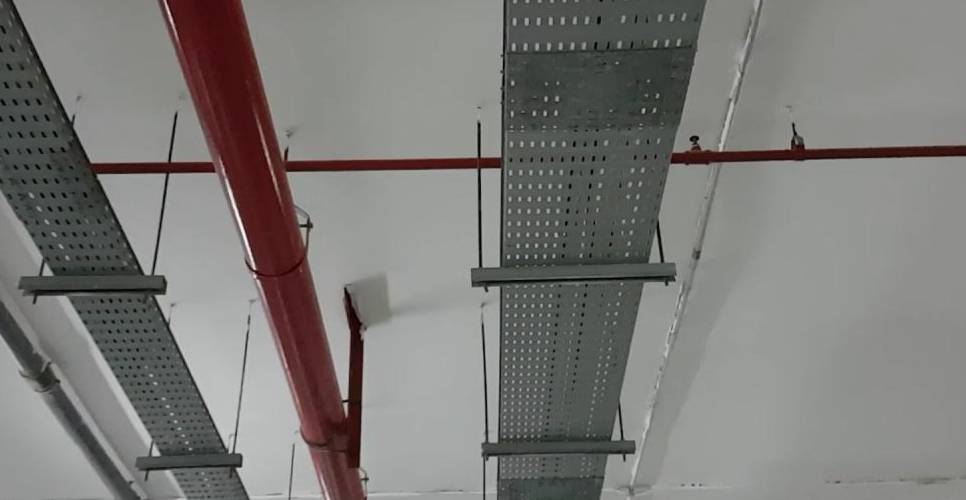
Modular tray systems allow planners to establish defined routing channels within confined infrastructure. In high-density telecom environments, the selection of a properly engineered ladder cable tray system often supports structured segregation while maintaining mechanical stability. This separation simplifies maintenance and reduces the possibility of induced interference from adjacent systems.
Grounding Continuity
Metallic tray systems must maintain consistent bonding across joints, supports, and transitions. Discontinuous grounding creates stray voltage paths that affect sensitive telecom equipment.
Reliable grounding design supports predictable electromagnetic conditions and aligns with electrical compliance standards observed across GCC developments. Bonding integrity should be verified at installation, not assumed.
Ventilation And Heat Management
Telecom nodes often operate within enclosed technical rooms or rooftop cabinets exposed to high ambient temperatures. In the GCC, summer conditions regularly exceed 45°C. Cable bundles within poorly ventilated trays accumulate heat, accelerating insulation wear and reducing performance stability.
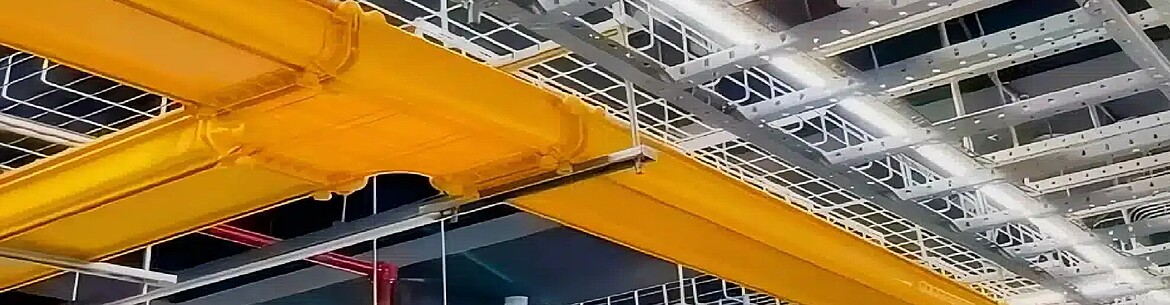
Open or mesh-style tray systems improve airflow around cables, supporting passive cooling and reducing long-term thermal stress.
Durability In Gulf Environmental Conditions
Containment systems in the GCC must resist corrosion caused by salinity, humidity, and airborne particulates. Coastal cities present additional exposure risks due to salt-laden air. Inferior surface treatment or thin galvanisation layers deteriorate rapidly under such conditions.
Material durability ensures structural alignment and grounding continuity over the service life of the network. Degradation in support systems introduces mechanical instability that can affect cable positioning and bonding reliability.
Planning For Expansion
5G infrastructure is not static. Capacity upgrades, densification, and tenant-driven enhancements are routine across commercial and public-sector projects. Containment systems must accommodate incremental growth without structural compromise.
Provision for spare capacity, accessible routing paths, and reinforced support spacing reduces disruption during network expansion. Designing for expansion at the outset prevents reactive modification and preserves system integrity.
Infrastructure As A Performance Determinant
The effectiveness of 5G deployment in the GCC will be measured by network consistency as much as peak speed. Signal reliability depends on disciplined routing, structural stability, and environmental suitability.
At West Port, containment systems are specified with attention to load performance, segregation strategy, grounding continuity, and climatic durability. Cable trays, ladders, and mesh systems must perform as engineered infrastructure components, not installation accessories. Interference control begins with structured physical design. When tray systems are selected and installed according to clear engineering principles, the network foundation remains stable under operational demand. 5G performance is sustained by the integrity of its physical pathways. In the GCC’s demanding built environment, those pathways must be engineered with precision.