
Tray Check After Dubai’s Winter Rains: Drainage, Corrosion Hotspots and Wind Uplift Risks Offshore

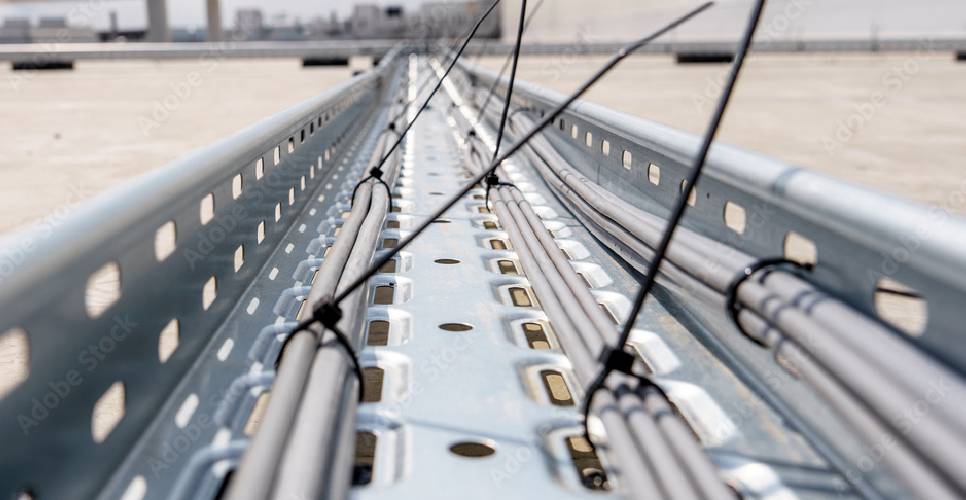
Every year, the first winter rains in Dubai arrive like a reminder that even the most hardened industrial structures have their weak moments. Rooftop cable routes, offshore platforms, desalination plants, and port-side substations all experience the same pattern: suddenly the trays that performed perfectly in August heat begin revealing issues that summer alone would never expose. For engineers who manage electrical infrastructure in coastal GCC environments, the post-rain inspection window has become almost as important as the annual shutdown itself.
Why Drainage Matters More After Gulf Winter Storms
Dubai’s rain events may be brief, but they hit hard. Flat roofs and open steel structures shed water unpredictably, and cable trays especially ladder and mesh types tend to accumulate runoff around support points. When installers assume water will drain naturally, they ignore the way blown sand, nesting debris, and rust flakes can block the perforations that are supposed to help trays self-clear.
After a winter storm, stagnant water sits in low points and around splices longer than most people realize. This is where corrosion initiates: not in the places constantly sprayed by salt air, but in the quiet pooled sections that remain damp for several hours at a time. Offshore structures magnify the problem. Waterborne chlorides attack uncoated cut edges aggressively, and this is one of the reasons many teams now coordinate directly with cable tray manufacturers in uae to specify trays with reinforced zinc layers or FRP alternatives for sections most vulnerable to standing water.
Drainage checks are not glamorous work, but they prevent the long-term degradation that shows up silently often after the worst timing possible, at peak load.
Corrosion Hotspots
Winter moisture works like dye penetrant; it highlights every weakness already forming beneath the surface. The first areas to inspect are couplers and splice plates, because they combine thin steel, bolt holes, and micromovements that scrape coatings off over time. The telltale orange blooms usually begin on the underside, where no one looks unless something is already sagging.
Another hotspot is the interface between the tray and the support bracket. Here, trapped moisture accelerates galvanic reactions, particularly on rooftops where steel and aluminum components mingle. The corrosion patterns can be strangely local, one bracket pristine, the next bracket pitted because airflow and water paths vary unpredictably across large roofs.
Technicians should also pay special attention to accessory components. Bends, reducers, and drop-outs tend to corrode faster because the geometry encourages water to collect in tiny pockets. This is why high-spec cable tray accessories with thicker galvanization or sealed edges often outperform budget variants despite appearing identical at first glance.
Wind Uplift: A Critical Risk Often Overlooked
Most structural failures connected to winter storms aren’t from water; they’re from wind uplift. Anyone who has worked offshore knows how suddenly the forces change after a passing cold front. Cable trays behave like wings when the wind hits from below, and a single loose fastener can turn an entire section into a vibrating beam.
Rooftop installations in Dubai see similar challenges. Trays that seem rock solid in calm weather begin fluttering when rooftop winds exceed 60–70 km/h. The motion is subtle at first small oscillations that fatigue bolts and widen holes. But after one or two storm cycles, those oscillations amplify, transferring stress to the anchors embedded in concrete or steel.
Winter inspection teams often discover missing fasteners, cracked washers, and trays that have shifted several millimetres off their intended alignment. These aren’t cosmetic defects; they are indicators that uplift forces during the previous storm exceeded design assumptions. In offshore environments, uplift checks become urgent because repeated cycles can compromise earthing continuity, leaving a tray unable to clear faults safely.
Analytics And Maintenance Data Point To A Seasonal Pattern
Across GCC industrial portfolios, maintenance logs show a clear pattern: corrosion detections, misalignment reports, and accessory replacements peak between December and February. The installations that suffer the most are typically those exposed to bidirectional winds or located near rooftop depressions where water collects before draining.
By contrast, summer inspections reveal far more issues related to thermal expansion bowed trays, stretched couplers, and cracked protective coatings. Understanding these seasonal signatures helps teams prioritize inspection routes: winter is for moisture and wind effects; summer is for heat-driven distortions.
Offshore facilities contribute another layer of insight. Studies from regional operators indicate that 40–55% of all corrosion-related tray repairs trace back to water exposure during the winter months rather than salt spray alone.
Building A Smarter Post-Rain Inspection Culture
f there is one lesson from Dubai’s winter storms, it is that early-season moisture provides the perfect window to catch emerging failures before summer workloads return. Engineers who treat winter rainfall as a built-in testing cycle not an interruption tend to maintain far more resilient cable infrastructure.
The smartest asset owners now schedule rapid-response checks within 24–48 hours after significant rainfall. They focus on the four places weather always attacks first: pooled sections, unsealed cut edges, accessory fittings, and any mounting point exposed to uplift. This targeted approach protects both uptime and long-term structural integrity.
In an environment where sand, salt, heat, and sudden winter winds all compete to erode critical systems, the post-rain inspection isn’t optional; it’s the frontline defense that keeps rooftop and offshore cable networks safe, grounded, and ready for the next season.